Enhance KPIs with OKRs
OKR
Enhance KPIs with OKRs
Already have KPIs? Learn how OKRs use the same metrics but drive transformation instead of monitoring. One practical example shows the difference.

Contributor:

Serge Tikhonchuk
3 months, 3 weeks ago
Most organizations use KPIs—some with balanced scorecards and dashboards, some without. Every manager tracks numbers: financial statements show revenue and profit, HR reports display headcount and costs, web analytics show visits and conversions. These are all metrics.
When organizations designate certain metrics as KPIs, they establish target values or threshold ranges. Many companies link KPIs to employee bonuses, making them deeply familiar across the organization.
Then come OKRs—used by leading companies for almost half a century, but still misunderstood and elusive for many. The Objective is usually straightforward. But when people set Key Results (“target metrics showing success for the Objective”), they often ask: if we already have KPIs, aren’t we just tracking the same numbers twice?
Here’s the clarity you need: if you have KPIs with targets, you already have a measurement system. Both frameworks use identical metrics—profit, revenue, user visits, conversion rates. The distinction lies in their mission: KPIs assess business health and maintain operations (the “run”); OKRs drive development and transformation (the “change”).
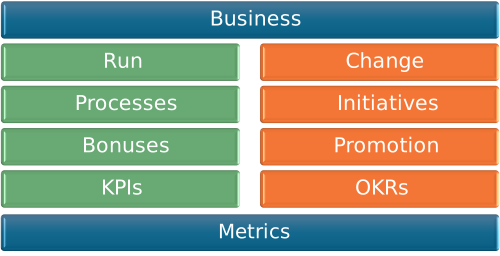
Run vs. Change: The Core Distinction
Every business operates with a mix of “run” and “change” activities. Startups are almost 100% change-focused, while mature companies emphasize run. KPIs govern “run” by tracking ongoing stability and performance—the vital signs of your organization. OKRs drive “change” by setting bold objectives with measurable results, focusing on transformation and breakthrough progress.
From KPI to OKR: A Practical Example
Suppose you have a KPI: “Achieve $50M revenue.” To turn this into an OKR, start with an inspiring Objective like “Become the market leader” or “Enter the top 10 firms in the southern district pink pajamas market.” Then, set Key Results:
- KR1: Achieve $50M revenue (your original KPI)
- KR2: Maintain 25% profit margin
- KR3: Capture 15% market share
- KR4: Open 12 new retail locations
Notice how the Objective turns a number goal into a purpose, and the Key Results provide a balanced, actionable roadmap.
Going Further with OKRs
The confusion ends when you understand: same metrics, different missions. Organizations need both—KPIs to maintain excellence in today’s operations, OKRs to achieve tomorrow’s breakthroughs.
Remember, OKRs are more than just O+KRs. When fully embraced, the OKR system becomes a bridge from vision and strategy to daily actions. It creates a culture of purpose and focus, helping your business stay both grounded and inspired. For deeper analysis, see our full article comparing metrics, OKR strategies, and business health.
- 03/12/2026
- 72
Best Goal Setting Apps in 2026: 7 Tools Compared and Ranked
Editor's Pick: If you want one goal setting app …

- 11/14/2025
- 359
4 Simple Questions to Get to Life's Purpose
At some point, we all start wondering: why are we…
